Meet the women of Voci di donne

January 24 3:00pm @UCC Missoula
Donations are always welcome to support our mission of providing fair fees to our musicians.
Thank you for your support!
Settimia Caccini
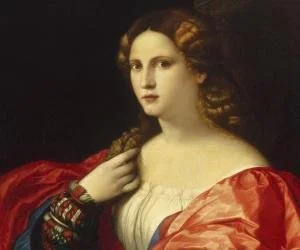
Settimia Caccini (1591-1638) was one of the first women to have a successful career in music. Marcello Buttigli, a popular music critic during Caccini’s time said she was “an illustrious singer with superhuman grace and an angelic voice.” Nicknamed “La Flora”, Settimia sang in her family’s consort in Florence with her mother, singer Lucia di Filippo Gagnolandi, father, composer Giulio Caccini, and older sister, composer and singer Francesca Caccini. After marrying, Caccini and her husband Alessandro Ghivizzani were employed first by the Medicis and later by the Gonzaga family of Mantua, where they both had the opportunity to work with Monteverdi. Caccini and her husband performed in Lucca and Parma for years. Caccini likely composed at least four works under her married name, eventually returning to the Medici court as a singer in 1636 after her husband’s death. Despite not being as prolific a composer as her sister, Caccini’s talents as a singer were greatly admired.
Barbara Strozzi
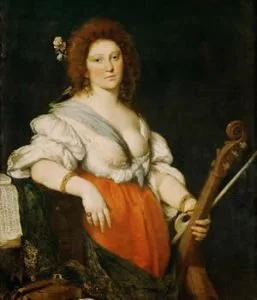
Barbara Strozzi (1619-1677) was born to a servant in the household of Giulio Strozzi, who, shortly before 1638, adopted her. Giulio Strozzi was a central personality in Venetian cultural circles, thus Barbara grew up in an artistic, intellectual environment, receiving lessons not only in voice, harpsichord, lute and composition, but also in Latin, Greek, rhetoric and history. Barbara Strozzi's oeuvre, including over one hundred works of secular vocal chamber music, was almost completely published during her lifetime. Her cantatas are among her most valuable contributions to the 17th-century repertoire.
Isabella Leonarda
Italian born Isabella Leonarda (1620-1704) joined a convent where she became magistra musicae, and eventually, mother superior. Many of her published works for voice, strings, and organ continuo were contained in fifteen printed volumes. These works, motets, masses, music for vespers, and instrumental pieces, were composed for feast days at her convent. The sonatas in Leonarda's Opus 16 of 1693 may be the first such sonatas to have been published by a woman.
Antonia Bembo
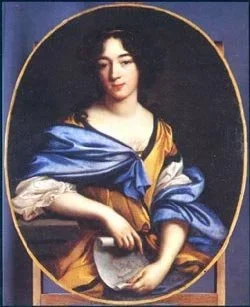
Antonia Bembo (1640-1720) was a native of Venice but spent most of her composing career in France. She maintained a consistent relationship with King Louis XIV and his family, who respected her first for her beautiful singing voice and later for her compositional skills. Bembo was a singer in her early life and later composed predominantly for high voice and continuo to suit her own soprano range. She studied with famed composer, Francesco Cavalli, and often found inspiration from the compositional techniques used by another of Cavalli’s famous students, Barbara Strozzi.
Bianca Maria Meda
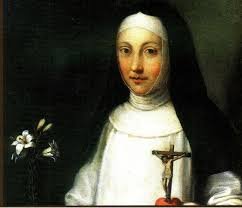
Bianca Maria Meda (1665-1700) was an Italian composer and Benedictine nun at the convent of San Martino del Leano in Pavia. Very little is known about her life and she published only one work, a book of motets called Mottetti a 1, 2, 3, e 4 voci, con violini in Bologna in 1691. This composition includes ten motets and two works for solo voice and two violins.
CONCERT PROGRAM
Hor che Apollo
È pazzo il mio core
L’amante segreto
Barbara Strozzi
Sonata Sesta & Sonata Decima
Isabella Leonarda
Habbi pietà di me & In amor ci vuol ardir
Antonia Bembo
Due luci ridenti
Settimia Caccini
Cari musici
Bianca Maria Meda
Margaret Baldridge and Loy Koch, violins
Caitlin Cisler, soprano
Aneta Panusz, harpsichord
Adam Collins, cello